


Why collagen is the key to greater mobility
Suddenly you notice them…those little limitations that weren't there before . Your knees crack when you climb stairs, your shoulders feel stiff after exercise. And in the mornings, it takes you a little longer to really get going? Perfectly normal, but not unchangeable. Because what many don't know is that our joints change quietly and subtly. One reason for this is the natural decline of a key building block in the body – collagen. It gives our connective tissue structure, makes tendons, ligaments, and cartilage resilient , and ensures that movement remains fluid . Here you'll learn why now is the perfect time to learn more about collagen and what you can do to maintain or even regain your mobility in the long term.

 from Paulina
Contents
1
Collagen is the key building block of your articular cartilage. It ensures that movements are smooth and that your joints are protected like by a kind of shock absorber.
2
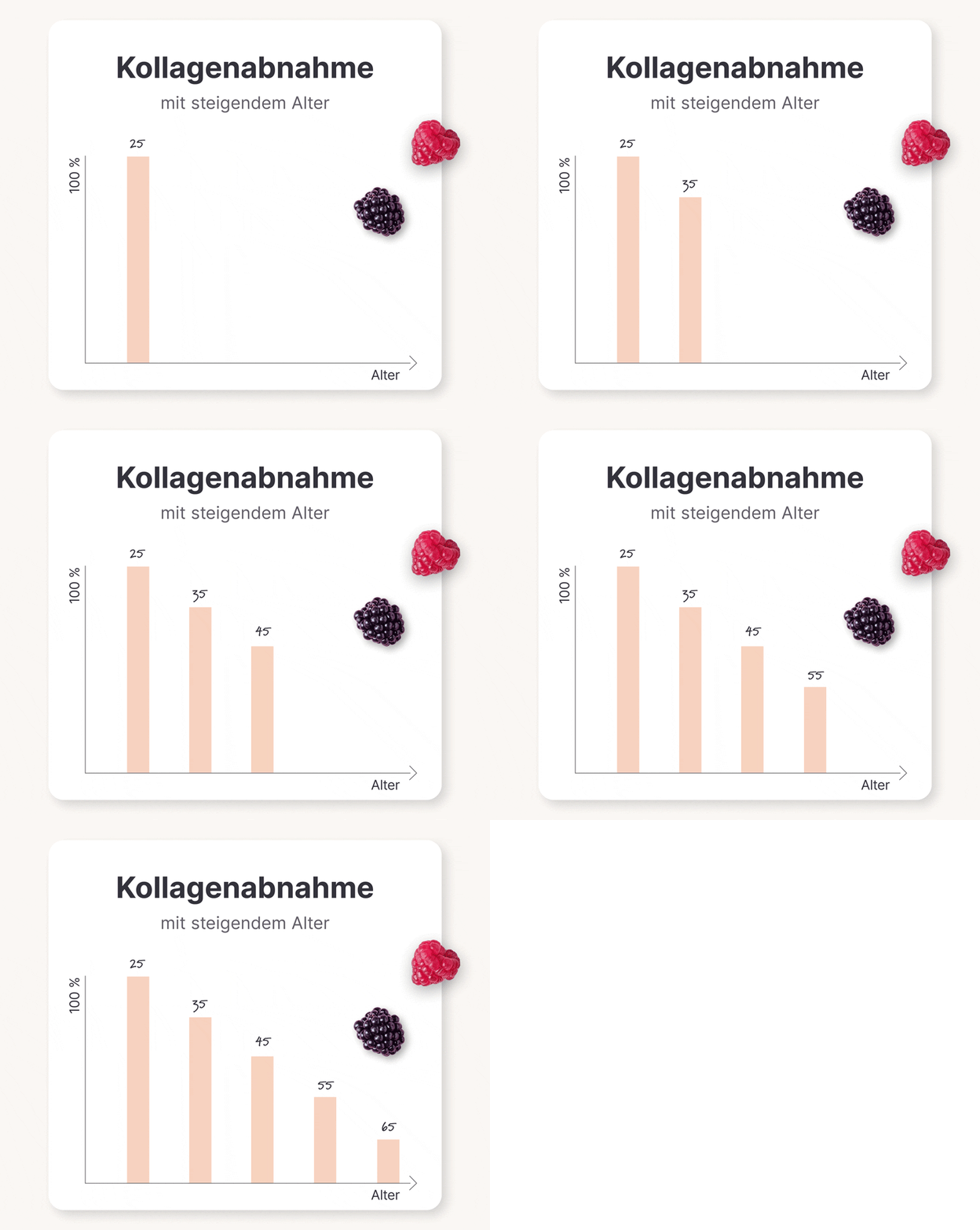
The body's own collagen production decreases as early as the mid-20s , which can impair the resilience of the joints.
3
Taking hydrolyzed collagen can help provide the body with building blocks for the formation and maintenance of cartilage tissue.
4
Not all collagen works the same! Specific collagen peptides, especially type II, are particularly relevant for supporting joint health.
5
Regular intake of collagen , combined with exercise and a balanced diet, can make a valuable contribution to your long-term well-being.
Collagen as the foundation of healthy joints
Joints are among the most complex structures in the human body . They enable precise movements, provide stability, and must withstand daily stresses, whether in everyday life, during sports, or due to occupational demands. For these tasks to be performed smoothly, the
The ends of bones are covered with articular cartilage. This pressure-elastic tissue acts like a shock absorber and protects the joint from wear and tear.
A crucial component of articular cartilage is collagen, particularly type II collagen . It forms a tightly woven fibrous network responsible for the cartilage's strength, elasticity, and resilience. Only through this structural network can the cartilage remain resilient and perform its function.
fulfill in the long term .
The body's own collagen production begins to gradually decline as early as age 25. At the same time, the demands placed on cartilage structure increase with age or through regular stress. The natural breakdown of collagen can reduce cartilage elasticity, which can manifest as a reduced sense of movement or joint stiffness.
Scientific studies show that hydrolyzed collagen – collagen broken down into peptides – provides the body with the specific amino acids it needs for cartilage tissue regeneration . These peptides can not only serve as building blocks but also stimulate signaling processes that promote the body's own collagen synthesis. Regular intake of high-quality collagen peptides can therefore make a valuable contribution to maintaining joint health. Especially when combined with targeted exercise and a nutrient-rich diet, this approach supports joint function and thus contributes to greater mobility and quality of life.
How collagen works in joint metabolism
Taking collagen peptides is therefore one way to actively support the body in maintaining healthy joint structures . Hydrolyzed collagen, meaning enzymatically broken-down proteins, contains specific amino acids such as glycine, proline, and hydroxyproline, which are particularly abundant in cartilage tissue. Due to hydrolysis, these peptides are in a form that the human intestine can absorb very well. When choosing a collagen supplement , be sure to check that it is hydrolyzed !
After absorption, the collagen fragments are transported via the bloodstream to various tissues, including the joint regions. There, they can either serve as structural building blocks for the synthesis of new collagen or have a regulatory effect by stimulating the activity of cartilage-forming cells. This so-called "bioactive effect" is the subject of intensive research and provides promising indications of an essential role in cartilage metabolism.
Unlike many other supplements, collagen supplements do not aim to mask symptoms in the short term. Rather, they promote the processes that are crucial for the structural regeneration and resilience of articular cartilage. Clinical studies show that, in particular, type II collagen, when taken regularly, can improve joint function and reduce limitations in movement .
However, it's important to keep things realistic: collagen is not a drug, but a supplement. It complements, but does not replace, healthy joints. For lasting effects, the combination of targeted exercise, joint-friendly training, and a balanced nutrient intake is crucial. As part of a holistic approach, collagen can therefore make a valuable contribution to promoting joint health.
Which collagen is the right one?
Not every collagen supplement is automatically suitable for joint health! This is primarily due to the different types of collagen , each fulfilling specific functions in the body. While types I and III are predominantly found in skin, tendons, ligaments, and bones, articular cartilage consists almost entirely of type II collagen . This type is essential for the elasticity and resilience of the cartilage matrix and should therefore be the focus when it comes to targeted support for joint health.
Joints are fine.
Many available collagen products contain only type I , occasionally combined with type III. While these variants can be beneficial for skin or connective tissue, they offer only limited effectiveness in terms of cartilage regeneration. Products with type II collagen, or even better, with a combination of all three relevant types , are significantly less common, but all the more valuable for comprehensive joint and movement support.
Besides choosing the right type of collagen, the form of the supplement also plays an important role. Hydrolyzed collagen , which is protein enzymatically broken down into smaller peptides, is particularly recommended. These so-called collagen peptides have high bioavailability and can be more easily absorbed in the digestive tract and utilized more efficiently by the body. Powdered forms also offer flexible application, for example in shakes, coffee, or yogurt, and can therefore be easily integrated into everyday life.
Another crucial point is the product's quality . High-quality collagen supplements should consist of transparently declared, branded raw materials, be free of artificial additives, flavorings, or added sugar, and be produced according to certified standards. Independent laboratory analyses and quality certificates provide additional assurance that the product delivers on its promises. Therefore, anyone wanting to specifically support their joint health should pay attention not only to the packaging but, above all, to the contents when choosing a collagen product.

Targeted support for your joints: The SHEKO Multi Collagen
For those actively promoting joint health, SHEKO Multi Collagen is a well-considered choice. Developed for effective and convenient daily use, it provides bioactive collagen peptides and specifically supports the structures crucial for mobility, stability, and regeneration. Thanks to a carefully formulated recipe with high bioavailability, the product delivers precisely the nutrients your body needs to optimally nourish connective tissue and cartilage.
Triple action: The special feature of the SHEKO collagen complex
SHEKO Multi Collagen contains an innovative 3-in-1 complex of collagen types I, II, and III – a combination offered by only a few products in this form. While types I and III are primarily relevant for skin, tendons, ligaments, and bones, type II plays a central role in articular cartilage. This type is often neglected, even though it is the most important building block for an intact cartilage matrix. Through the interaction of all three types, the powder supports various tissue structures simultaneously for greater flexibility, resilience, and well-being in everyday life.
The collagen peptides are enzymatically hydrolyzed , meaning they are broken down into smaller units. This improves absorption in the intestines and increases the likelihood that the bioactive amino acids reach where they are needed. With 9 grams of high-quality protein per 10-gram serving, the powder also contributes to your daily protein intake. Its neutral taste makes it easy to mix into shakes, coffee, or yogurt.
Highest quality and compatibility
SHEKO collagen powder is manufactured in Germany under strict quality standards and is free from sugar, artificial flavors, colors, or fillers. The three patented, branded raw materials it contains are laboratory tested , ensuring purity and safety. Its high tolerability makes it particularly suitable for people who consciously choose to avoid unnecessary additives.
Multi Collagen is a useful supplement for anyone who wants to specifically promote their joint health – scientifically sound, practical in everyday life, uncompromising in quality.

Thinking holistically: Why collagen alone isn't everything
Collagen is a valuable building block for your joint health, but its effects are best realized when your lifestyle provides the right conditions. Health isn't achieved through a single product, but rather through the interplay of many factors . Those who want to remain mobile and vital in the long term should understand collagen as part of a holistic approach.
- Regular exercise : Joints thrive on movement. Only through movement is the production of synovial fluid stimulated and the cartilage adequately nourished. Joint-friendly activities such as swimming, cycling, walking, or yoga promote mobility and blood circulation without overloading the joints.
-
A balanced diet : A nutrient-rich diet provides important micronutrients for collagen formation. Vitamin C, zinc, copper, and omega-3 fatty acids are particularly relevant. They not only support connective tissue metabolism but also help regulate inflammatory processes in the body.
- Healthy body weight : Excess weight increases pressure on the knee, hip, and ankle joints and accelerates wear and tear. A healthy weight range noticeably relieves the joints and supports their regeneration.
- Strong muscles as a protective shield : Muscles stabilize the joints and relieve stress on the cartilage tissue. Specifically, targeted training of the surrounding muscles (e.g., thighs, buttocks, back) can help to reduce mechanical stress.
to distribute the load evenly.
-
Drink enough fluids : Water is not only essential for numerous bodily processes, but also a component of synovial fluid. Adequate hydration supports tissue elasticity and ensures optimal cartilage nourishment.
- Manage your exertion: Pay attention to signals such as stiffness, pain, or fatigue. Joints are robust, but not wear-and-tear parts. Regular breaks, changes of position in everyday life, and a conscious variety of movements are essential to avoid one-sided strain.
- Reduce stress : What affects the mind also affects the body. Chronic stress influences hormonal processes and can negatively impact regeneration and tissue structure.
What does research say about collagen for joints?
In recent years, the scientific study of collagen supplements has deepened considerably. Numerous studies now demonstrate that the regular intake of hydrolyzed collagen peptides can have positive effects on joint function and cartilage structure , particularly in people with age-related or stress-related conditions. The peptides appear to act not only as building blocks but also as signaling molecules that can activate the body's own regenerative processes.
Staying mobile, even in old age
Healthy joints mean more than just freedom from pain. They represent independence, mobility, and a zest for life. Collagen can be a crucial component, especially if you prioritize quality and consistency from the start. Products like SHEKO Multi Collagen, which combines all relevant collagen types in a bioavailable form, are the ideal choice. Combined with regular exercise, a balanced diet, and a mindful lifestyle, this provides a sound, holistic approach to improved well-being.
Frequently Asked Questions
Is collagen really necessary for joints?
Collagen is a natural and essential component of your joints, especially the cartilage. Since the body's own production decreases with age, taking collagen supplements can help provide your body with the necessary building blocks to maintain joint structures and support their normal function.
Which type of collagen is best for the joints?
Type II collagen is particularly relevant for joint health, as it is the main component of articular cartilage. However, we also combine this type with types I and III, since these are found in tendons, ligaments, and bones, which also contribute to the stability and function of the joints.
How long should I take collagen for joints?
The effects of collagen supplements on joints can take time. Initial noticeable effects, such as improved mobility or a reduction in discomfort, often occur after 8 to 12 weeks of regular intake. For lasting benefits, long-term and consistent use is recommended.
Are there any side effects from taking collagen for joints?
Collagen powder is generally considered well-tolerated, with no known side effects. Choose a pure product without unnecessary additives. If you have any concerns or pre-existing medical conditions, it's always advisable to consult a doctor beforehand.
Can I combine collagen for joints with other dietary supplements?
Yes, combining collagen with other joint-specific nutrients such as vitamin C (essential for collagen synthesis) or hyaluronic acid can be beneficial. Therefore, we also recommend combining it with our Balance Shakes, as they contain an optimal amount of vitamin C.
Sources
- ¹ https://www.barmer.de/gesundheit-verstehen/koerper/haut/kollagen-wirkung-1286740
- ² https://www.thieme-connect.de/products/ejournals/pdf/10.1055/a-1047-2822.pdf
- ³ https://www.aerztezeitung.de/Medizin/Kollagen-Hydrolysat-stimuliert-den-Aufbau-von-Knorpel-318515.html
- ⁴ https://biogena.com/de-ch/wissen/ratgeber/kollagen-gelenke_bba_5689598
- ⁵ https://natu.care/de/kollagen/kollagen-auf-knochen
- ⁶ https://www.online-fitness-academy.de/magazin/kollagen.html
- ⁷ https://de.revitaltrax.com/blogs/revitaltrax-blog/aminosauren-im-kollagen
- ⁸ https://praxis-contour.de/kollagenproduktion-anregen/


